Interested in Alternative Investments?
At HUDSONPOINT Capital, we don’t just manage investments — we craft a bespoke strategy centered around you. As your dedicated family office, we align every advisor and handpick opportunities from over 200+ institutional funds to build a diversified portfolio that grows and protects your wealth. By identifying low-correlation alternative investments with high-potential growth opportunities, we aim to unlock exclusive value.
What Are Structured Notes?
Structured notes are pre-packaged investment products that combine traditional fixed-income securities with derivatives, like options. They can be shaped to fit any market view an investor might have. Whether you're looking to hedge against a downturn, capitalize on a bullish trend, or access alternatives like real estate or commodities, there’s a structured product for that.
These hybrid products are designed to offer tailored risk-return profiles, providing investors with exposure to underlying assets (e.g., equities, indices, commodities) while offering principal protection, downside protection, and upside participation. For investors seeking strategic growth with controlled risk, structured notes are an excellent tool.
The typical components of structured products include:
- Maturity Date. Structured notes have a fixed maturity date, typically ranging from 2 to 6 years.
- Underlying Asset. The performance of a structured note is linked to an underlying asset or index.
- Protection Features. Many structured notes offer varying downside protection levels, which can help safeguard principal.
- Payoff Structure. The investor receives returns based on the performance of the underlying asset, with customized terms that balance risk and reward.
Simply put, structured notes are flexible, customizable investments that align with your specific financial objectives, whether you're seeking income generation, growth, or reduced risk. They offer access to diverse asset classes alongside enhanced downside protection — and the potential for high returns in both stable and volatile markets.
Examples of Structured Notes
Imagine a structured product linked to the S&P 500 Index. This note might offer 100% principal protection at maturity, meaning your original investment will be returned at the end of the term, regardless of how the market performs (as long as the issuer doesn’t default).
On the upside, the note might offer 75% participation in the S&P 500’s growth, capped at a 40% return over a 5-year period. In other words, if the S&P 500 rises by 50%, your return would be capped at 40%. However, if the index grows by 20%, you would receive 75% of the 20% gain, giving you a 15% return.
Capped notes may be preferable for risk-averse investors who seek predictability and stability in returns. In contrast, uncapped notes offer the potential for higher returns but come with greater exposure to market volatility.
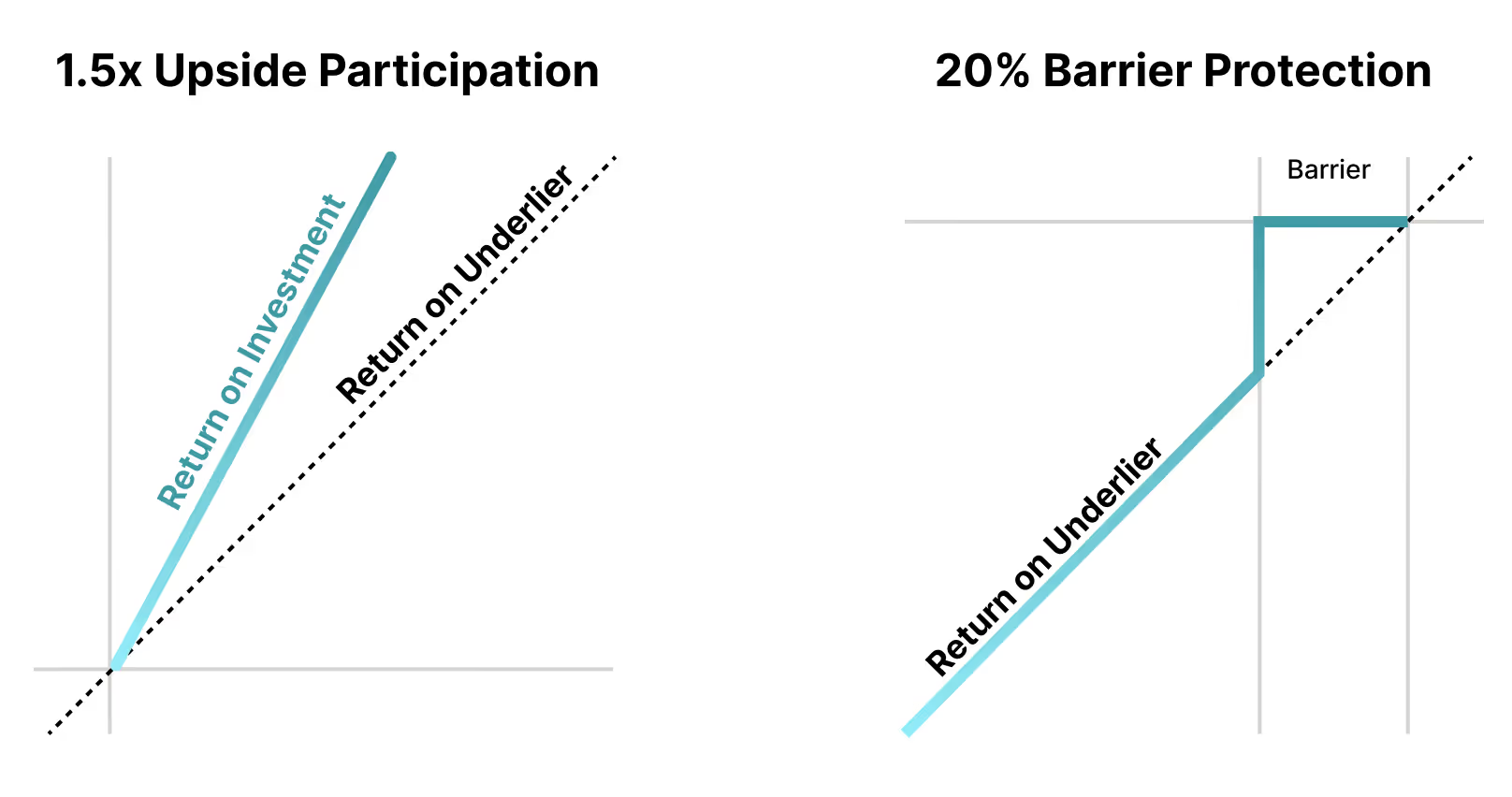
Another example of a structured note is a 20% barrier note. With this type of structured product, if the underlying asset drops by 19%, you will retain your principal. However, if it falls by 21%, you will lose 21% of your principal, making it crucial to understand the level of risk you're willing to take on.
Or, you might consider a note that offers 1.5x upside participation. It could be linked to the MSCI Emerging Markets Index with 20% barrier protection on top. If the index goes up by 30%, you get 1.5x the growth, resulting in a 45% return. However, if the index falls by more than 20%, the protection would kick in, and your principal would be safeguarded.
Why Invest in Structured Notes?
Investors choose structured notes for their flexibility, customization, and ability to offer both protection and participation in market movements. Here’s why structured notes could be an excellent addition to your portfolio:
Downside Protection
Structured notes can offer principal protection, meaning a portion—or even the entire principal—can be shielded from market losses. For instance, Principal Protected Notes guarantee you’ll get your initial investment back at maturity, assuming no default by the issuer, even if the market takes a downturn.
Upside Participation
Structured notes allow you to participate in the upside potential of underlying assets. Whether through capped or uncapped returns, you can capture market growth. An uncapped note linked to an equity index lets you enjoy unlimited returns, while a capped note may limit your returns but offer more stability.
Diversification
Structured notes offer access to a broader range of assets beyond traditional stocks and bonds, including commodities, currencies, and indices. For example, a commodity-linked note could be a great way to hedge against stock market volatility, offering exposure to oil prices without directly investing in the commodity market.
Customization
Structured notes can be tailored to meet your specific financial goals. More conservative investors can prioritize principal protection and capped returns to ensure their investment stays secure. Meanwhile, more aggressive investors may use customized terms to achieve higher upside potential in exchange for less downside protection.
Yield Enhancement
In a low-interest-rate environment, structured notes can offer enhanced returns through digital coupon notes or income-generating components that provide predictable cash flows, in addition to capital appreciation. For example, a digital coupon note might offer fixed returns based on the performance of the underlying, providing a predictable income stream and capital appreciation.

Let’s find the right investment solutions to meet your goals
HUDSONPOINT capital's team of professionals will help you discover the world of alternative investments.

Overcoming Barriers to Entry
Historically, structured notes were only available to institutional investors or individuals with substantial capital, often requiring minimum investments ranging from $1 million to $10 million. This approach makes structured notes more accessible to a broader range of qualified investors, allowing you to diversify your portfolio without the typical high-entry barriers.
At HUDSONPOINT Capital, we democratize access to structured notes by pooling the capital of multiple investors, which allows us to offer these opportunities at a significantly lower minimum commitment, starting as low as $100,000.
Types of Structured Note Solutions
At HUDSONPOINT Capital, we offer access to many types of structured notes tailored to your financial needs. Some of the most common types of notes include:
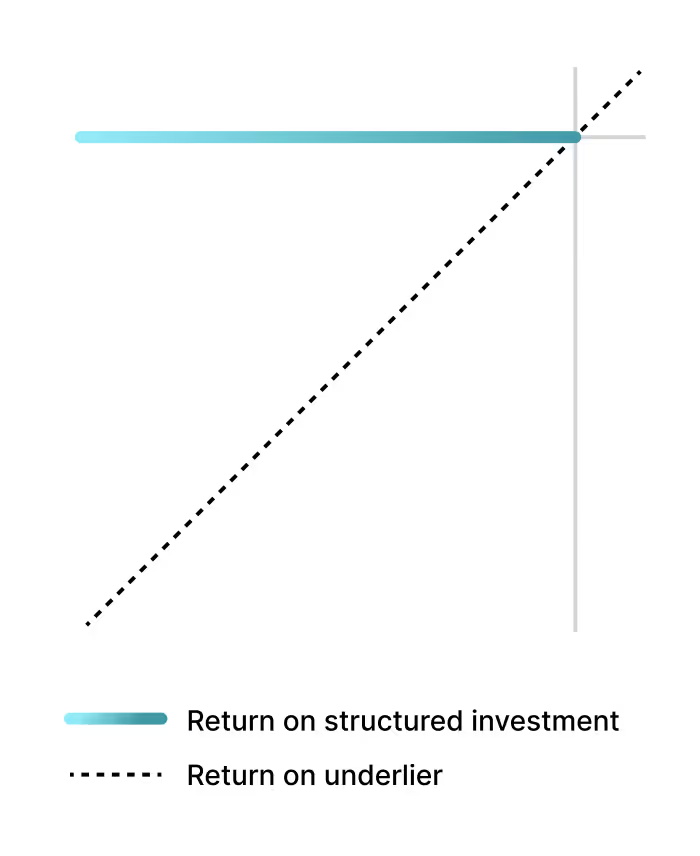
Principal Protected Notes
These notes guarantee that you’ll get 100% of your principal back at maturity, no matter how the market or underlying asset performs, as long as the issuer doesn’t default. If you want peace of mind that your initial investment is safe, even during market downturns, these notes are ideal. They allow you to participate in the potential upside while ensuring your investment is safe.
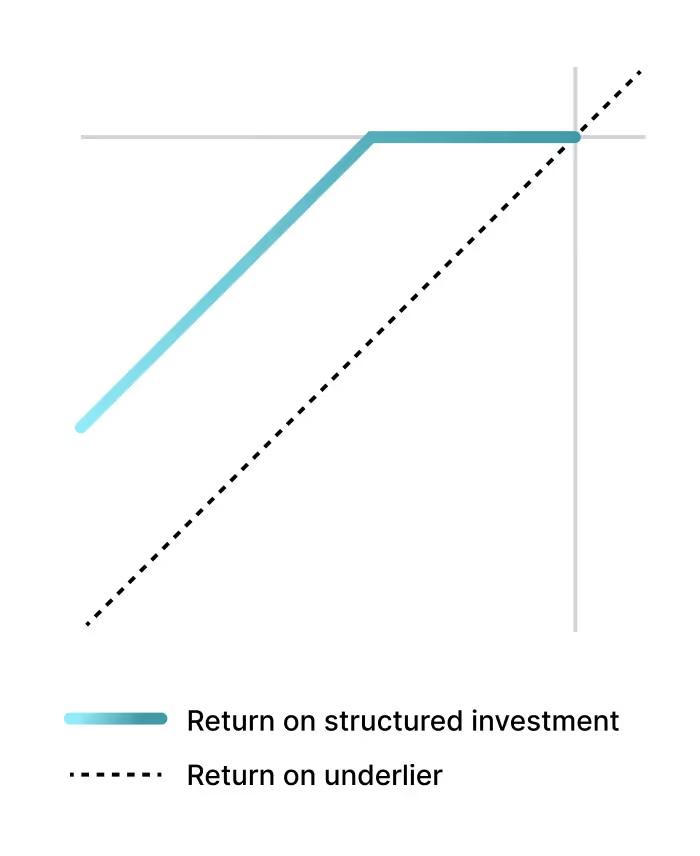
Buffer Notes
Buffer notes provide a specific level of protection against losses. For instance, a 20% buffer means your investment is protected against losses up to 20%. Let’s say a buffer note insures against market downturns, and the markets fall by 10%—you would not suffer any loss. If the markets drop by 25%, you would lose only 5% of your principal (thanks to the buffer).
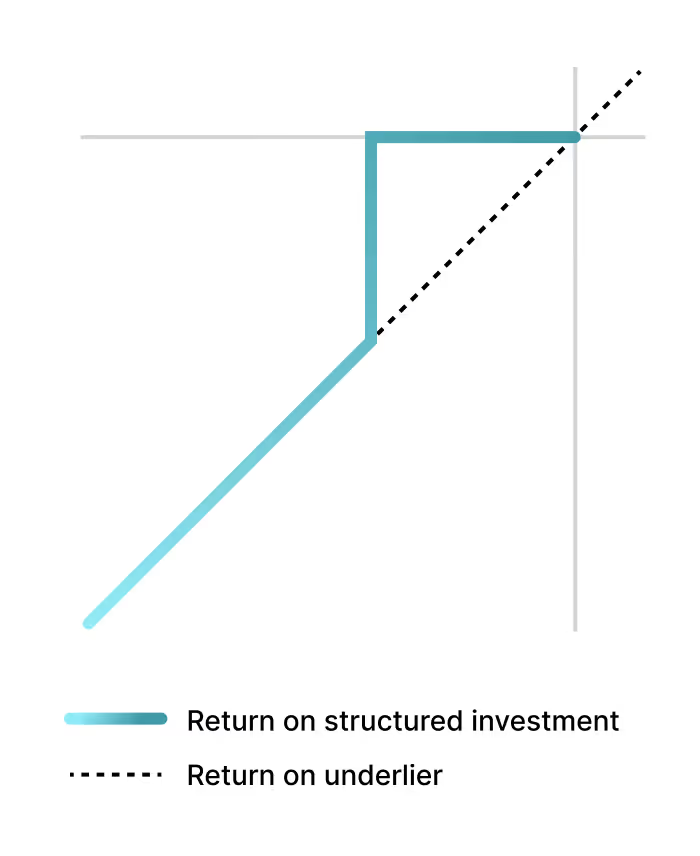
Barrier Notes
Barrier notes provide downside protection within a specific range, but become “unprotected” if the market falls below a pre-set level (called the “barrier”). For example, if your barrier is 20% and the underlying falls 19%, you will take no losses. But if it falls 21%, you will take the full loss. However, barrier notes often have lower premiums and better terms than buffer notes.
Capped Notes
Capped notes limit the upside potential to a fixed return, allowing for more predictable outcomes with more risk management. For example, if the underlying grows 30%, a capped note might only provide a 20% return in exchange for more downside protection. If you prefer predictable returns and want to limit your exposure to market volatility, capped notes may be a good option.
Uncapped Notes
Uncapped notes offer unlimited upside potential in the underlying asset while still providing some protection against downside risk. If the underlying asset grows by 50%, you would benefit from the entire 50% return (as if you had bought it outright). Uncapped notes are ideal if you believe in the long-term growth of the underlying but still want insurance against losses.
Laddered Portfolios
A laddered portfolio strategy involves purchasing structured notes with different terms and maturities. This helps manage risk and liquidity, providing more flexibility while maintaining exposure to the upside. By spreading out notes across different timeframes, you can avoid having all of your notes mature at once, smoothing out potential volatility.
What Are The Risks of Structured Notes?
While structured notes can offer attractive benefits, as with any financial vehicle, there are some risks to consider:
Credit Risk. Structured notes are typically issued by investment banks or other financial institutions. If the issuer defaults, you could lose some or all of your investment. When selecting a structured note, it’s essential to assess the creditworthiness of the issuer.
Market Risk. The value of structured notes is linked to the performance of the underlying asset. A decline in the asset means your investment could lose value, especially if sufficient protection features are not in place.
Liquidity Risk. Structured notes are typically illiquid investments. They often require you to hold them to maturity. Finding a secondary market can be challenging if you need to access your funds before maturity.
Tax Implications. The tax treatment of structured notes can be complex and varies depending on the type of note. It is important to consult with your financial advisor or tax professional to understand the potential tax impact for your specific situation.
Take the Next Step
Structured notes are ideal for investors seeking customized exposure, risk management, and defined outcomes. They offer the potential for unlimited upside, excellent downside protection, and proper diversification for discerning high-net-worth individuals.
At HUDSONPOINT Capital, we don’t just offer investment access — we write your playbook. As your dedicated financial quarterback, we align every advisor, asset, and strategy around one goal: growing and protecting your wealth. With access to exclusive, institutional-caliber alternative investment opportunities, we help you succeed one play at a time.
Ready explore structured note opportunities? Schedule a consultation today.
.avif)

.avif)